What Is Schedule A Litigation? A Plain-English Guide
Schedule A litigation lets a brand sue thousands of anonymous online sellers at once, freezing their accounts before they know they've been sued. Here's how it works.
Schedule A litigation is a US trademark and copyright enforcement tactic where a brand owner sues hundreds or thousands of anonymous online sellers in a single sealed case, then obtains an emergency court order that freezes their marketplace storefronts and payment accounts before the sellers even know they've been sued. It's concentrated in one federal court in Chicago. It is, by some distance, the most effective and the most controversial thing anyone has built for hitting counterfeiters where it actually hurts.
I've spent years watching enforcement that doesn't work. Customs catches the pallet, the next one sails. The platform pulls the listing, it's back by lunchtime under a new name. None of it touches the seller's money, which is why none of it stops them. Schedule A is the one tool that breaks that pattern, and it deserves to be understood properly rather than nodded past. So here's the plain-English version, with the case for it and the case against it laid out honestly.
Why is it called Schedule A?
The name is the trick, so start there.
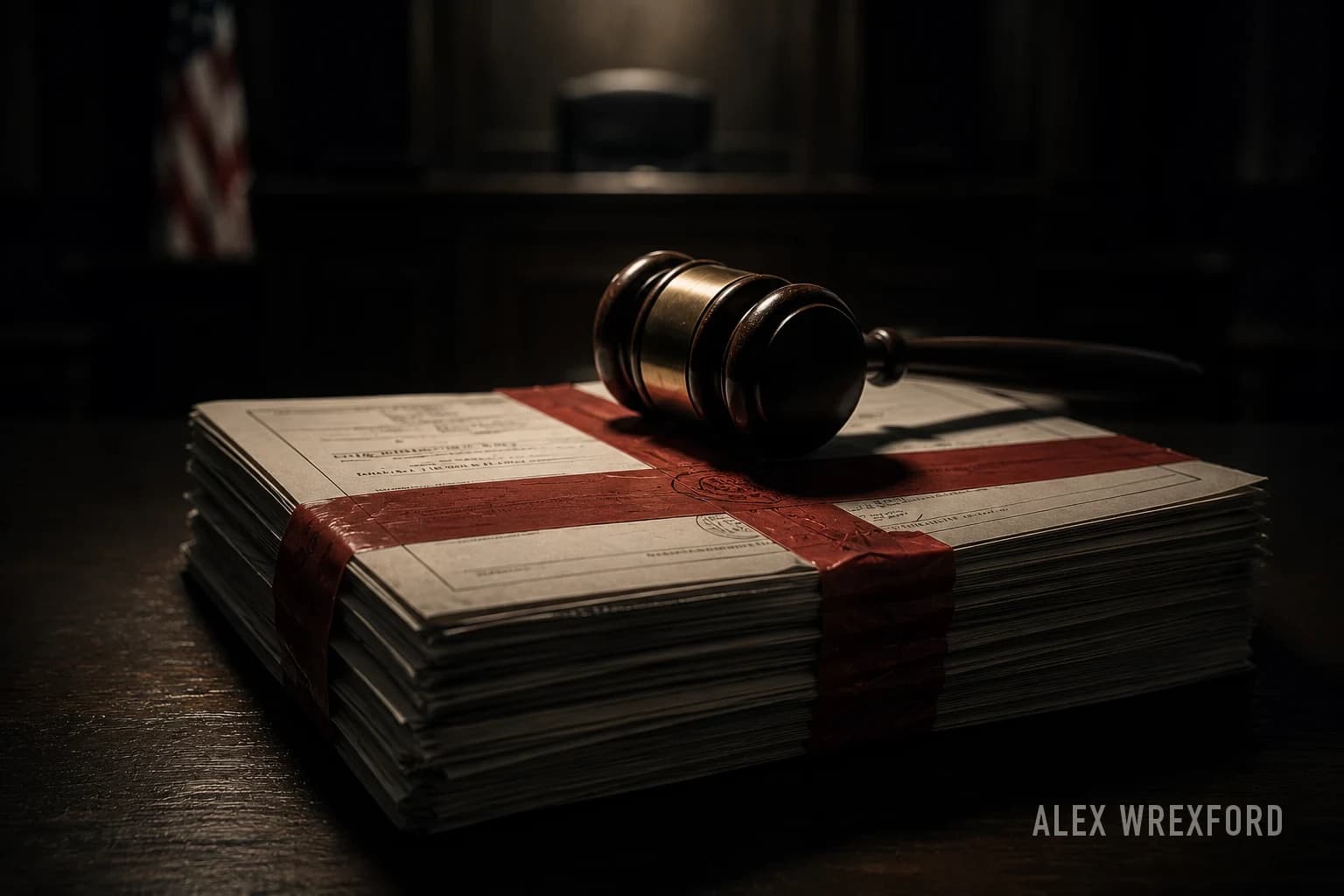
When you sue someone in a US federal court, you file a complaint. At the top sits the caption, the bit that reads Plaintiff v. Defendant, and normally the defendants are named there in public for anyone to read. A Schedule A case does it differently. The brand refers to the defendants generically as "the Schedule A Defendants" and puts the actual list, sometimes hundreds of sellers, sometimes thousands, into a separate exhibit attached to the complaint. That exhibit is labelled Schedule A. Then the brand asks the court to seal it.
So the people being sued can't read their own names in the case against them. The defendants are real and the list exists, but it lives in a sealed attachment instead of the public caption. That one piece of stagecraft is what makes everything else possible. If you want the bare definitions of the terms used here, my glossary covers Schedule A, TRO, and asset freeze.
How does a Schedule A case work?
It turns on a couple of Latin words and some court machinery, so let me pin them down before using them.
Ex parte means a court application made by one side only, with the other side neither present nor notified. In most litigation that's close to forbidden, because the basic deal of a court is that both sides get heard. A TRO, a temporary restraining order, is a short-term emergency injunction. A judge orders someone to stop doing something, or freezes something, right now, before any proper hearing on the merits.
Put those together. The brand files its sealed complaint and asks the judge for an ex parte TRO against the still-secret defendants. The sellers aren't there. The sellers don't know. The judge is looking at one side's evidence, mostly screenshots of the allegedly infringing listings, and is being asked to act before the sellers can move their money. For years, in Chicago, judges granted it routinely.
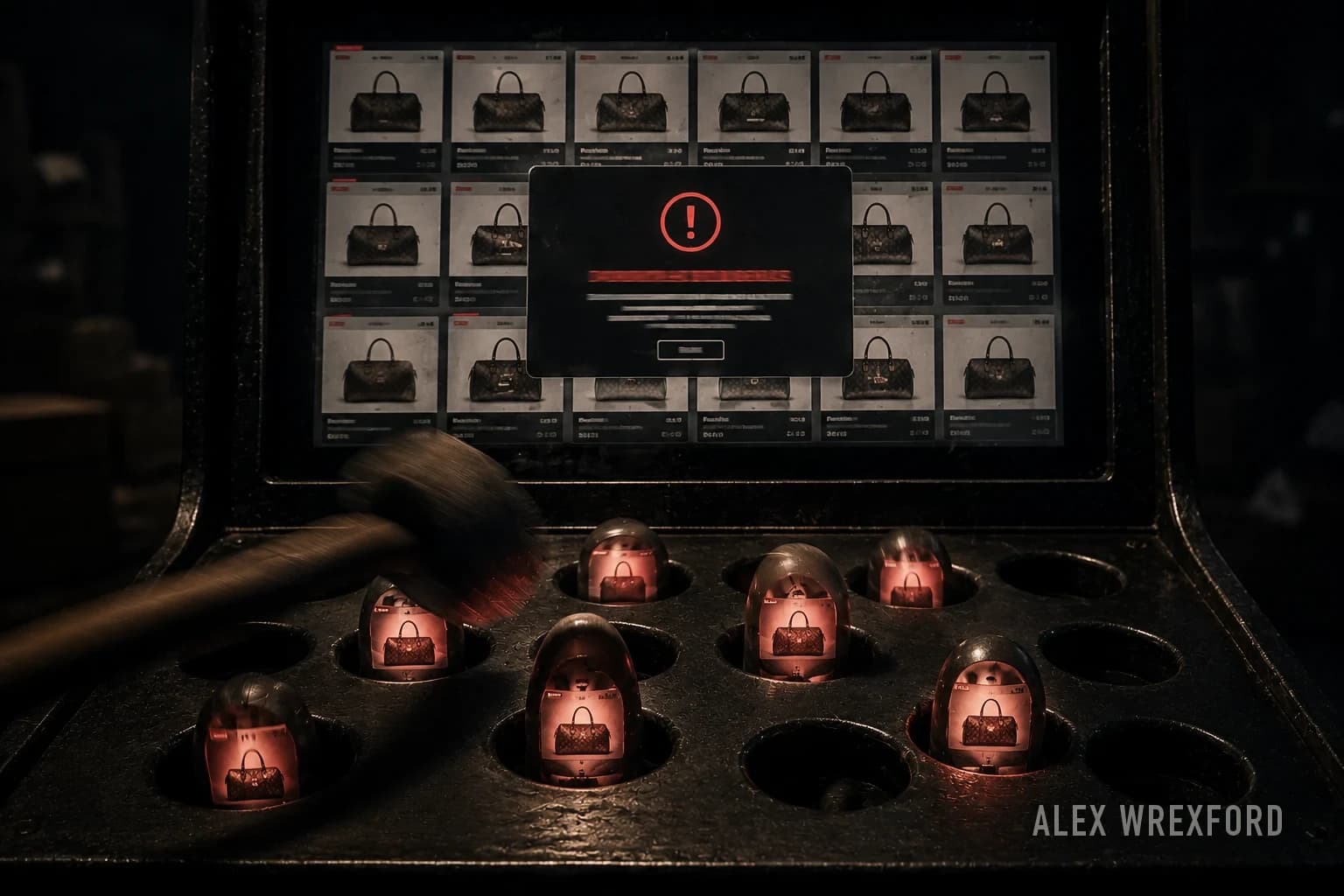
What the order does is an asset freeze. And here's where the design gets brutal. The brand serves that order not on the sellers, who still know nothing, but on the marketplaces and payment processors that hold the money and run the storefronts. Those companies comply, because the alternative is sitting on the wrong side of a federal injunction. They freeze the merchant accounts, often the entire balance, not just the proceeds of the specific item complained about. The storefront goes dark and the working capital stops moving.
The seller learns she's been sued when her account freezes. The lawsuit and the punishment arrive in the same instant.
How does the brand actually get paid?
The frozen account is the whole point, because it's the source of the payout. The case then resolves one of two ways, and both end with money moving toward the brand.
The first is settlement. The seller, or her hastily hired lawyer, pays to be released. Frozen working capital is existential, so the pressure to settle fast is enormous. The brand takes the payment and dismisses that seller. In Professor Eric Goldman's dataset, voluntary or joint dismissals, which is roughly the settlement category, made up about 28% of resolved cases (per Goldman; see below).
The second is a default judgment, which a court enters against a defendant who never shows up. A seller in Shenzhen, facing a case in a foreign court in a foreign language, very often does nothing, because hiring a US lawyer costs more than the frozen account is worth. So she defaults, and the court can order the frozen funds transferred to the brand. About 70% of resolved cases ended this way in Goldman's data.
Settle and pay, or vanish and have the money taken. Either road, the cash flows from the counterfeiter to the brand. That inversion, the counterfeiter ending up out of pocket rather than the brand, is the structural blueprint behind recovery-based brand-protection models you'll hear pitched.
Why the Northern District of Illinois?
Not because Chicago is where the counterfeiters are. They're mostly in China. It's because of what the judges in that district were willing to do.
In Goldman's dataset, about 88% of these cases (2,846 of 3,217) were filed in the Northern District of Illinois, with the Southern District of Florida a distant second at around 7.5%. One practitioner analysis put the district at over 80% of the 4,000-plus suits filed nationally, and reported it had earned a sarcastic nickname: "the Northern District of Illinois vs. the Internet."
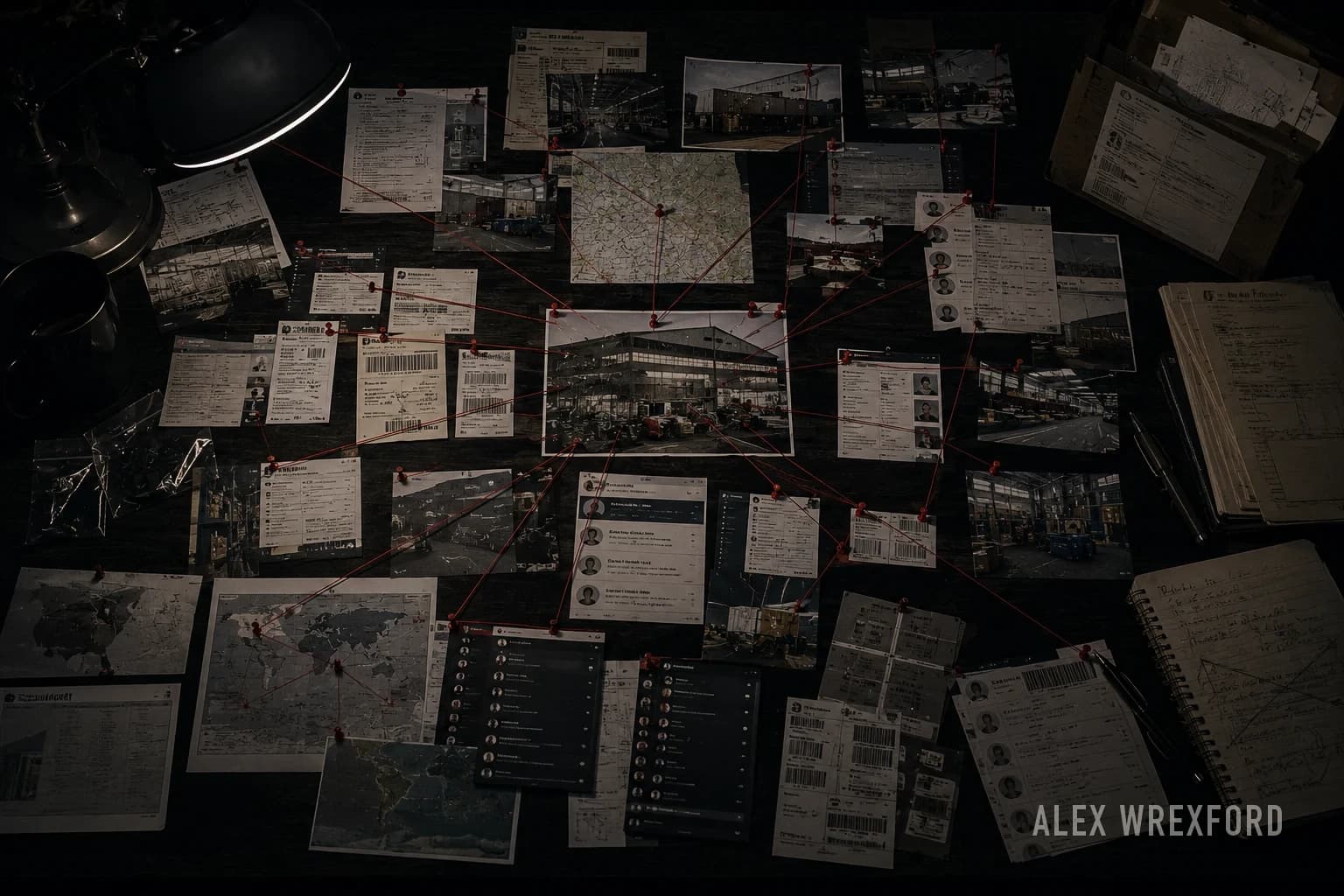
The draw was simple. Those judges had historically been willing to grant ex parte TROs and prejudgment asset freezes against anonymous foreign sellers on screenshots alone. The district built up a supporting body of procedure, the sealing practice, the acceptance of service by email when you can't physically serve someone in Shenzhen. Goldman goes further and reports that one judge provided filing templates that aided these cases, though I should flag that templates claim is his characterisation, not something I've seen in a court document. The broader point isn't really disputed. Chicago became the venue because Chicago said yes, and lawyers go where the orders are.
How big did this get?
A warning first, because the numbers in this trade are slippery and come from different sources covering different date ranges. You can't add them together.
Goldman identified 3,217 of these cases filed through 28 December 2022, about 88% involving trademark claims, and growing fast: 533 in 2020, 733 in 2021, 935 in 2022. Each case bundles a crowd of defendants, typically in the low hundreds. Multiply that out and you reach his headline estimate, the one quoted everywhere: over 600,000 merchants sued through the scheme. Read that as "per Goldman", a careful scholar's modelled count rather than an audited tally. It's almost certainly the right order of magnitude, but it's a single-source estimate.
The economics run on joinder. Rule 20 of the Federal Rules of Civil Procedure governs when you can sue multiple defendants together, and it requires their claims to arise from the "same transaction, occurrence, or series." Bundle hundreds of defendants into one complaint and you pay one filing fee instead of hundreds. Goldman estimates this dropped the effective per-defendant cost from roughly $402 to about $2, and cost the federal courts more than $250 million in fees they should have collected, an estimate built from that arithmetic rather than an audited figure. Mass joinder is what makes the tactic cheap enough to be an industry.
For a second angle, a separate docket analysis counted roughly 4,207 Schedule A trademark cases in the Northern District of Illinois alone, from January 2013 to February 2025. Don't add that to Goldman's number. Different scope, geography, and end date.
Why is it controversial?
I've sold you the power. Here's the cost, and it's serious.
Goldman's central charge is that the scheme "works only by stretching applicable procedural rules past their breaking point." Break it into parts.
The notice problem. The defendant learns about the lawsuit when the account freezes. Proper service of process is frequently skipped for an email. The freeze creates settlement pressure through pure financial coercion, before any court has tested whether the claim is any good. You pay because you're bleeding, not because you've lost.
The joinder problem. Critics say the sellers bundled into one case have no real connection beyond selling similar products online. Not partners, not a conspiracy, just strangers swept together because it's cheaper. Improper joinder has become a main ground on which judges throw these cases out.
The over-broad freeze. Because the TRO usually freezes the whole account, not just the proceeds of the specific listing, legitimate sellers and sellers with genuine defences get caught and squeezed into settling. Goldman's go-to example is a case where a holder of a trademark on the word "emoji" sued sellers who'd used the word descriptively, on a poop-emoji mug and the like. Arguably ordinary fair use of a common word. But the defendants defaulted, so nobody appealed, and a questionable theory got cemented by silence rather than tested by argument.
And the human example that reached a mainstream audience: a mother hit with a $250,000 judgment over roughly $380 of homemade merchandise, reported as part of an Illinois "cottage industry" of mass suits. The careful caveat is that $250,000 is a statutory-damages default judgment, a number a court can enter on paper, not necessarily money collected. But the gap between $380 of homemade goods and a quarter-million-dollar judgment is the whole criticism in one ratio.
Are the courts pushing back?
Yes, recently, and from inside the very district that built the thing.
In November 2024, three N.D. Illinois judges sided with defendants on improper-joinder grounds, including in a case brought by a major carmaker. Then, in Eicher Motors Ltd. v. Schedule A Defendants, decided in August 2025, Judge John F. Kness wrote that "the Schedule A mechanism should no longer be perpetuated in its present form." He found the mass joinder "unjustified", said TRO motions "should fail at the outset because it is all but impossible for the Court to discern the likelihood of success from the one-sided evidence provided", and said prejudgment asset restraints "ought to be the rare exception, not the norm."
The courts have even started making plaintiffs pay for unjustified freezes. In Shenzhen Langmi Technology Co. v. Schedule A Defendants, decided in February 2026, a copyright plaintiff dismissed after defendants challenged the registrations. The defendants recovered the $10,000 bond, but they'd shown roughly $47,000 in lost profits while frozen. So they got back about a fifth of what the freeze actually cost. That case proves legitimate sellers really do get hurt, and that bonds are often set far too low to make them whole.
One important caution. Schedule A has not been shut down. Kness's decision is influential and quotable, but it's one judge's opinion, not binding precedent across the circuit. Other judges still grant these TROs. Cases are still filed. What you're watching is a renegotiation, not an abolition, and the thing being renegotiated is the right one: keep the part that hits the counterfeiter's money, lose the part that catches the innocent seller in the same net.
Does it actually stop counterfeiters?
Better than anything else in common use, and that's exactly why it's so hard to walk away from.
Every other tool removes a thing. Customs removes a shipment. The platform removes a listing. None touches the money, so the seller shrugs and relists. Schedule A goes for the working capital, the one thing a high-volume infringer can't shrug off, because the whole model runs on cash flow. It's the only mechanism in the trade that reliably reaches money instead of merchandise.
The tension never fully resolves. The feature that makes it work, surprise plus a freeze before the merits are tested, is the same feature that makes it constitutionally fragile and, in bad-faith hands, abusive. The seller running a fake-jacket operation and the seller who used "emoji" on a mug get the identical Tuesday morning. The order can't tell them apart. Only a human looking carefully at the evidence can, and the whole point of the ex parte freeze was to act before that careful looking happened. That's the argument for earning the freeze: verified targeting, test buys, traced payments, evidence a human has actually examined, rather than automated mass joinder.
Common questions
What is Schedule A litigation? A US trademark and copyright tactic where a brand sues hundreds or thousands of anonymous online sellers in one sealed case, then gets an emergency order freezing their marketplace and payment accounts before they know they've been sued. It's concentrated in the federal court in Chicago.
Why is it called Schedule A? The defendants aren't named in the public caption of the complaint. They're listed in a separate exhibit, labelled Schedule A, which the brand asks the court to seal. The sealed list is the trick that makes the rest of the tactic work.
Is Schedule A litigation legal? Yes, it's a real and widely used tactic. It's also contested. Several Chicago judges in 2024 and 2025 have criticised it on due-process and joinder grounds, but it hasn't been shut down and cases are still being filed.
Does Schedule A actually stop counterfeiters? It's the rare enforcement tool that reaches a seller's money rather than just a listing. Freezing working capital hurts a high-volume infringer in a way a takedown doesn't. That's exactly why it's both effective and controversial.
I go deep on all of this, including the human cost and the recovery model behind it, in the Schedule A chapter of The Takedown.
Key takeaways
- Schedule A is a US mass-defendant tactic where one sealed case sues hundreds or thousands of online sellers at once, mostly in the federal court for the Northern District of Illinois (Chicago).
- The sellers are hidden in a sealed exhibit, then hit with an ex parte freeze on their marketplace and payment accounts before they're served or even know they've been sued.
- It's the only common enforcement tool that reaches a counterfeiter's money instead of just removing a product or listing.
- Critics, including Professor Eric Goldman, argue it bypasses basic due process, misuses the joinder rules, and catches legitimate sellers in over-broad freezes.
- Since late 2024 several Chicago judges have pushed back, but this is a recent and uneven shift, not settled precedent. Schedule A has not been shut down.