Loading...
True crime
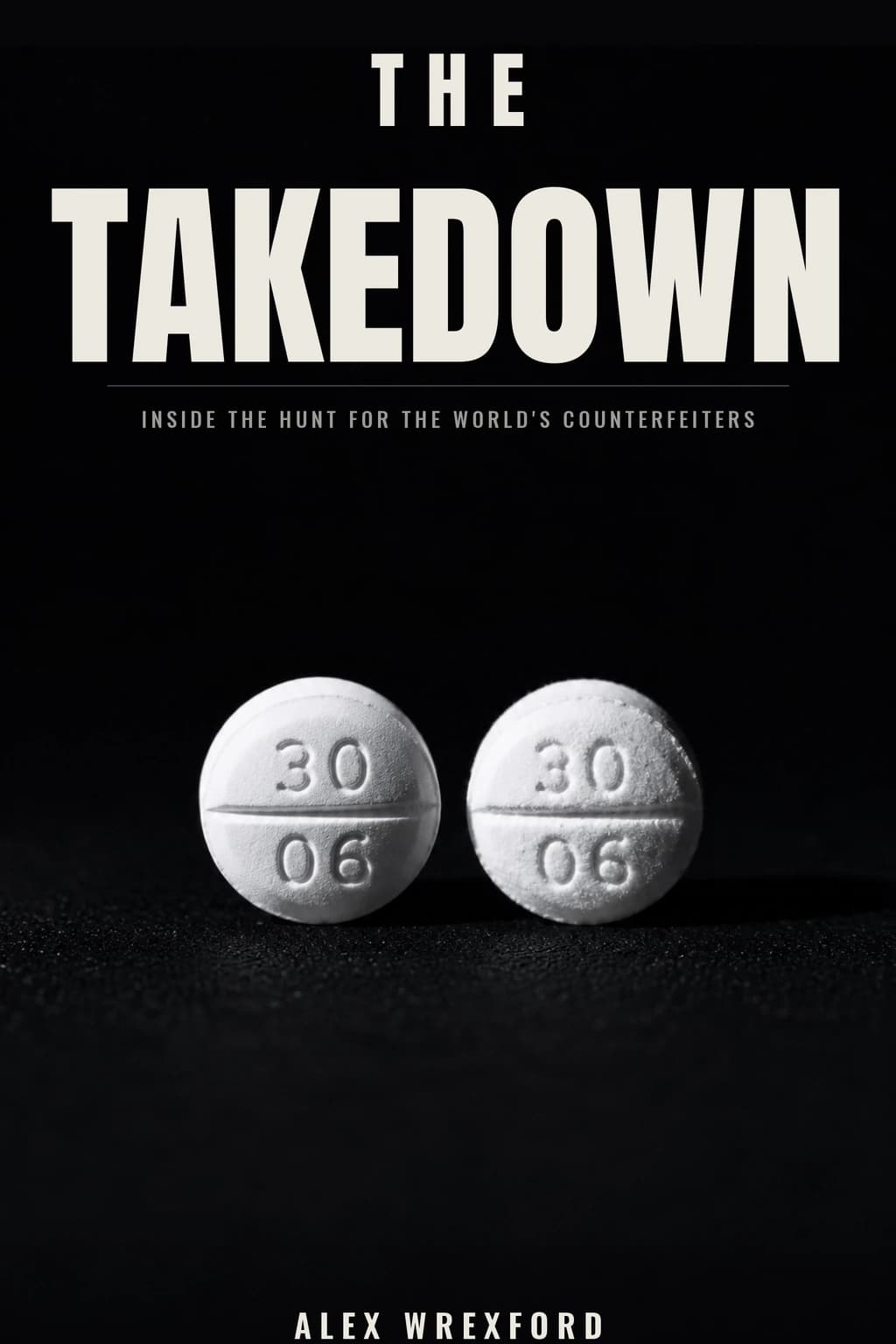
The Takedown
Inside the Hunt for the World's Counterfeiters
“Stop counting takedowns. Start catching people.”
A teenager buys a pill that looks exactly like the real thing. It isn't. A hospital infuses a cancer drug that came through a chain nobody checked. It's fake. A military helicopter flies with a chip pulled from electronic waste and re-stamped as new.
Counterfeiting is a two-trillion-dollar shadow economy, and almost everyone fighting it is fighting the wrong battle. They remove listings. The listing comes back by lunchtime under a new name. It's whack-a-mole, and the counterfeiters are winning it.
The Takedown is the story of the people who do it differently. The investigators who don't just delete the fake, they unmask the human behind it, follow the money, freeze the accounts, and make the counterfeiter pay. From the fake Apple Stores of Kunming to the superfake ateliers of Guangzhou, from counterfeit fentanyl to the courtroom machine in Chicago that can freeze a thousand anonymous sellers in a single sealed filing, this is how the world's counterfeiters actually get caught.
The fake is easy to find. The person behind it is the whole game. Here's how you find them.
“The fake is easy to find. The person behind it is the whole game.”
What's inside
Four parts, eighteen chapters
Part I
The Whack-a-Mole Trap
- 1The Two-Trillion-Dollar Shadow
- 2Why Takedowns Don't Work
- 3The Anatomy of a Counterfeit Operation
- 4The False-Positive Scandal
Part II
The Cases
- 5The Fake Apple Stores of Kunming
- 6One Pill Can Kill
- 7The Cancer Drug That Wasn't
- 8Counterfeit in the Cockpit
- 9Mirror Grade
- 10The Warehouse
- 11Schedule A
Part III
The Hunt
- 12The Test Buy
- 13The Teardown
- 14Following the Money
- 15Unmasking the Seller
- 16The Legal Toolkit
Part IV
What Actually Works
- 17For the Brand Owner
- 18The Coming Wave
The cases
Seven true stories
All drawn from public record. Where the author is not certain, he says so.
The Fake Apple Stores of Kunming
Not fake products, fake shops, with staff in blue shirts who believed they worked for Apple. Surfaced by a blogger, not by enforcement.
One Pill Can Kill
Counterfeit pills pressed to look like oxycodone, laced with fentanyl, sold over social media, killing teenagers. The chain from precursor chemicals to a kid's bedroom.
The Cancer Drug That Wasn't
Fake cancer medicine reaching oncology clinics, traced back up a grey-market chain across six countries to the people who shipped it.
Counterfeit in the Cockpit
Roughly a million suspect counterfeit parts found in military systems. Chips harvested from electronic waste, re-marked, and flown in helicopters and missiles.
Mirror Grade
The superfake economy. The Guangzhou ateliers, the authentication arms race, and the clone empire shut down by patient legal action.
The Warehouse
The shopping-agent and consolidation model behind haul culture, and how a coordinated EU and Chinese operation hit the hub.
Schedule A
A single sealed filing in Chicago names hundreds of anonymous sellers, freezes their accounts before they know they have been sued, and recovers the money.
What they're saying
“I have spent my career taking down listings. This book explains, uncomfortably well, why that was never going to work.”
“Reads like true crime, lands like a field manual. I gave a copy to every founder on my portfolio.”
“The first book that treats counterfeiting as what it is: an attribution problem, not a volume problem.”
Book details
Questions, answered
- What is The Takedown about?
- The Takedown is a true-crime investigation into how the world's counterfeiters get found, caught and made to pay. It argues that removing fake listings is theatre, and that the only thing that changes a counterfeiter's behaviour is being identified and made to pay. It runs from the fake Apple Stores of Kunming to counterfeit fentanyl, fake cancer medicine, re-stamped military parts, mirror-grade superfakes, the 2024 Pandabuy raid and the Schedule A courtroom in Chicago.
- Who is Alex Wrexford?
- Alex Wrexford is a British author who spent fifteen years investigating counterfeit networks for brand owners, from customs warehouses to courtrooms, before he started writing about it. The Takedown is his first book. He writes on counterfeiting and intellectual-property enforcement.
- Is The Takedown based on true stories?
- Yes. Every case in the book is drawn from the public record: court filings, agency statements and established reporting. One character, a brand owner called Meridian, is a clearly flagged composite used to follow a single business through the whole arc.
- What is the main argument of The Takedown?
- You cannot out-produce a counterfeiter. Counterfeiting is an attribution problem, not a volume problem. The people who win do not just delete the fake; they unmask the human behind it, follow the money, freeze the accounts and recover what was taken.
- Who should read The Takedown?
- Readers of Bad Blood, Empire of Pain and Billion Dollar Whale who want the next true story of how a hidden world really works, and founders, brand owners and lawyers who need to understand what actually stops a counterfeiter.
- What is Schedule A litigation?
- Schedule A litigation is a US legal tactic, concentrated in the federal court in Chicago, where a brand sues hundreds or thousands of anonymous online sellers in one sealed case and freezes their marketplace and payment accounts before they know they have been sued. It is the closest thing in the book to a method that actually hurts counterfeiters.