Why Are Your Product Photos the First Thing Copied?
Copycats steal your photos before your product because a photo sells for them on day one and costs nothing. That theft is also the easiest thing to take down.
Copycats take your photos before they copy your product because a photograph does the selling on day one and costs them nothing. A seller can list your image, take orders and only then go looking for stock that resembles it, and for a small brand that same theft is usually the easiest thing to take down.
You'll find your photo on a listing at a third of your price. The light will be yours, the props will be yours, sometimes even the shadow of your thumb on the edge of the frame. The product in the parcel won't be.
Why steal the picture instead of the product?
Because the picture is the expensive part.
Think about what went into one good product shot. The sample. The set. A morning of light that behaved. Then the edit, the cropping, the version for the marketplace and the square one for social. A brand pays for all of that before it sells anything. The person who right-clicks pays for none of it, and gets the same result: a buyer who sees the photograph and trusts it.
The photo also buys the copier time. A listing with a real-looking product shot can go live before any stock exists. If orders come in, the seller sources something close. If they don't, the listing goes and nothing was lost. That's the logic behind a lot of the copying a small brand meets online: test the market with your pictures, then decide whether to bother with a product.
So when you find your images on someone else's listing, you're often looking at the start of a copy, not the end of one.
Do you actually own your product photos?
Probably, and it's worth checking now rather than later.
US copyright law says protection subsists in original works of authorship fixed in a tangible medium, and lists pictorial works among them. A photograph is fixed the moment it's taken. No form, no fee, no registration. If you or an employee took the picture, the copyright is yours from that second.
The catch is the photographer you hired. Unless your contract assigns the rights to you, a freelancer may own the copyright and you may only hold a licence. That doesn't stop you acting against copies, but it can complicate who signs the notice. Find the contract. If there isn't one, get a short written assignment while you're still on good terms.
What can you do with that copyright?
Send a notice, and expect it to work more often than not.
In the US, the takedown process lives in section 512 of the Copyright Act. A valid notice to a platform needs six things: your signature, identification of the work, identification of each infringing copy with enough detail to find it, your contact details, a statement that you believe in good faith the use isn't authorised, and a statement under penalty of perjury that the notice is accurate and you're authorised to act. Registration isn't on the list.
That makes photos the strongest ground a small brand stands on. A trademark complaint asks the platform to judge confusion between brands. A copyright notice about your own photograph asks a much simpler question: is this the same picture? Usually it is, pixel for pixel. If you'd rather not draft it yourself, there's takedown help for stolen product photos that prepares the notice and the evidence for you to file. I write the guides at Brand Protection Tools.
When does registration matter?
When you want more than a takedown.
Two rules decide this. First, you can't sue over a US work until the copyright is registered. Second, statutory damages and legal fees are only available if you registered before the infringement began, or within three months of first publishing the work. Miss that window and you're left proving your actual losses, which for one stolen photo is hard.
Statutory damages under US law run from $750 to $30,000 per work, and up to $150,000 if the court finds the infringement wilful. Those numbers are why lawyers ask "is it registered?" before anything else.
Registering every product shot one at a time would be absurd. The Copyright Office lets you register a group of published photographs, or a group of unpublished ones, for $55, against $45 or $65 for a single work. For a brand that shoots a new range each season, a group registration after every shoot is cheap insurance. I'd do it before launch, not after the first copy turns up.
What should you do the morning you find one?
Slow down for ten minutes before you file anything. The evidence disappears faster than the copier does.
Capture the listing first: the full page, the web address, the seller's name and ID, the price and the date. A screenshot with the address bar visible is better than a cropped image of the photo alone. Then find your original and note when you first published it. That pairing, their copy beside your dated original, is the whole case.
Check it really is your photograph. A similar product in a similar setting isn't a copyright copy. Your image, cropped or recoloured, is.
Then file on the platform where the listing lives, through that platform's own form, and list every listing from that seller in the same notice. One notice per seller keeps the record clean if they come back. And keep a log. If the same seller reappears in a month, you'll want dates, not a vague memory of "that shop again".
Is the theft also how you catch them?
Yes, and this is the part most brand owners miss.
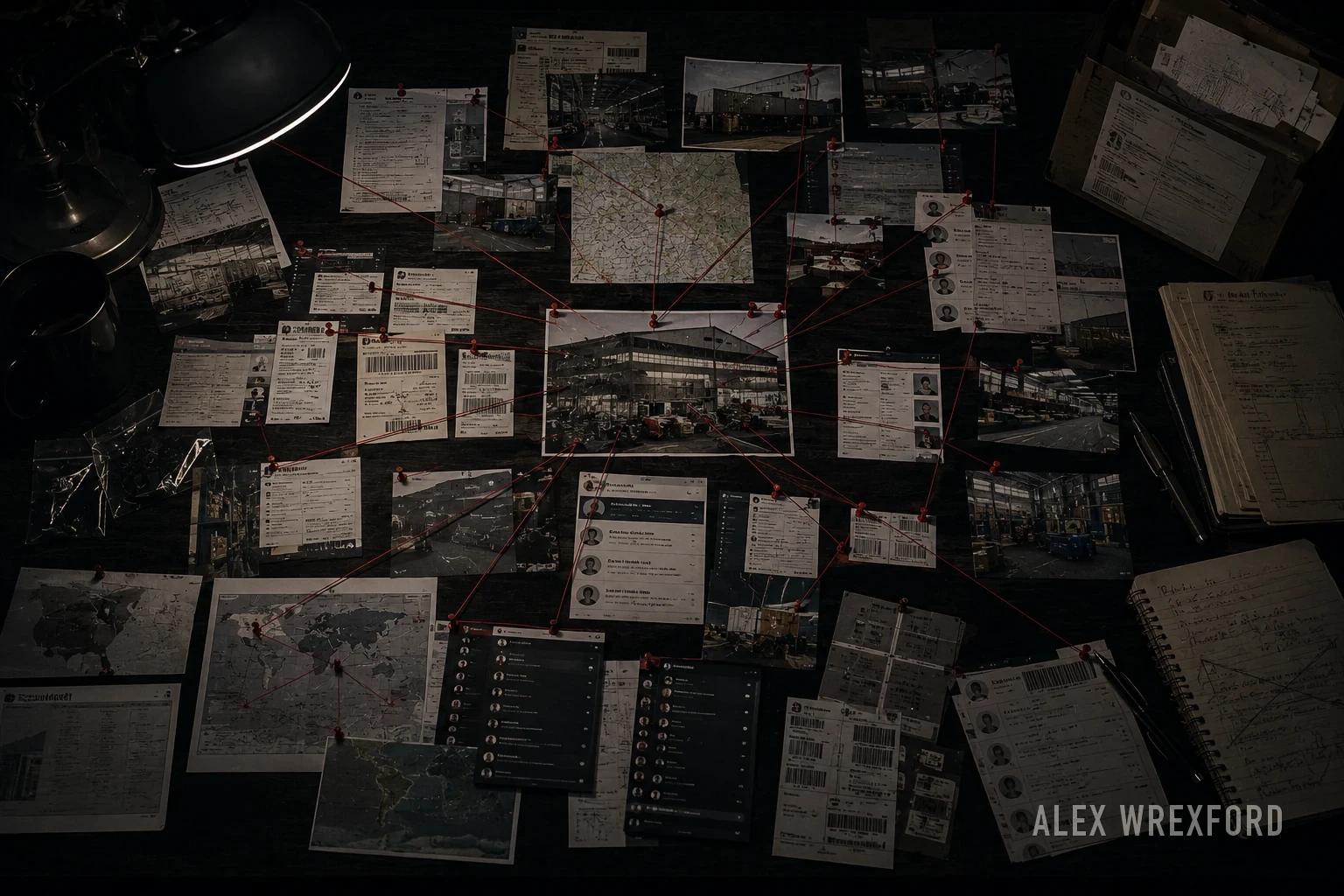
The copier stole your photo because it was free. But a stolen photo is also a fingerprint. The same image, with the same crop and the same small flaw, turning up on six storefronts under six names tells you those storefronts probably aren't six sellers. I wrote about these durable tells in how counterfeiters actually get caught: reused photos, copied text and repeated typos are what tie a cluster of shops back to one operator.
So the thing they steal first is the thing that gives them away.
That only works if you keep your originals. Save the full-resolution files with their metadata intact. Keep the raw files if you shoot raw. Note the date each image was first published and where. When a dispute comes, the person with the 40-megabyte original and the edit history wins the argument about who took the picture.
Finding the copies is the slow part. Reverse image search will turn up some of them. A free scan at brandprotectiontools.com/free-scan will search one product across the marketplaces it covers and come back with a count of what it found.
What about photos nobody took?
Here's the uncomfortable future. The next copier may not steal your photo at all.
Image generators can now produce a convincing product shot of something that doesn't exist, in your style, from a text prompt. A copy built that way leaves no stolen file to match. That's a large part of why I wrote The Infinite Fake: when the fake no longer needs your raw material, proving what's genuine becomes the job.
For now, though, most copiers still take the shortcut. Your photo is right there and it already works. Make it the thing you protect first, because for them it's the thing they take first.
If you want to check whether a listing in front of you is a copy, start with the listing itself. How to spot a counterfeit walks through the tells.
Sources
- 17 U.S.C. 102(a), subject matter of copyright, including pictorial works: https://www.law.cornell.edu/uscode/text/17/102 (checked 7 November 2026)
- 17 U.S.C. 512(c)(3)(A), the elements of a takedown notice: https://www.law.cornell.edu/uscode/text/17/512 (checked 7 November 2026)
- 17 U.S.C. 411(a), registration before an infringement action: https://www.law.cornell.edu/uscode/text/17/411 (checked 7 November 2026)
- 17 U.S.C. 412, registration as a condition of statutory damages and fees: https://www.law.cornell.edu/uscode/text/17/412 (checked 7 November 2026)
- 17 U.S.C. 504(c), statutory damages of $750 to $30,000, up to $150,000 if wilful: https://www.law.cornell.edu/uscode/text/17/504 (checked 7 November 2026)
- US Copyright Office fee schedule: $45 single application, $65 standard application, $55 group of photographs: https://www.copyright.gov/about/fees.html (checked 7 November 2026)
Key takeaways
- A copycat can list your photo before they've made or bought a single unit. The photo does the selling.
- Your copyright in your own photos is automatic, and it's the cheapest right a small brand holds.
- You don't need a registration to send a takedown notice. You do need one to sue, and timing decides whether statutory damages are on the table.
- The photo they steal first is the thread that ties their shops together. Keep the originals.